


Key Takeaways
- – Positive reinforcement helps dogs understand which behaviors are worth repeating.
- – Brief, frequent practice sessions are often easier for dogs and people to maintain.
- – Clear cues, consistent household rules, and well-timed rewards support learning.
- – Dogs need to practice calm behavior in everyday settings, not only in a quiet room.
- – Sudden behavior changes, fear, pain, or serious aggression warrant veterinary or qualified behavior support.
Good manners can make everyday life with a dog easier, from greeting neighbors and waiting at the front door to walking through a busy Houston neighborhood. Families exploring dog training classes can begin with a simple goal: teach the dog what to do, rather than focusing only on what not to do.
Training is more than a list of commands. It is a way to build communication through predictable routines. For example, a dog that learns to pause at an open door can be rewarded before going outside, making the desired choice clear while helping prevent rushed exits.
How Positive Reinforcement Supports Better Choices
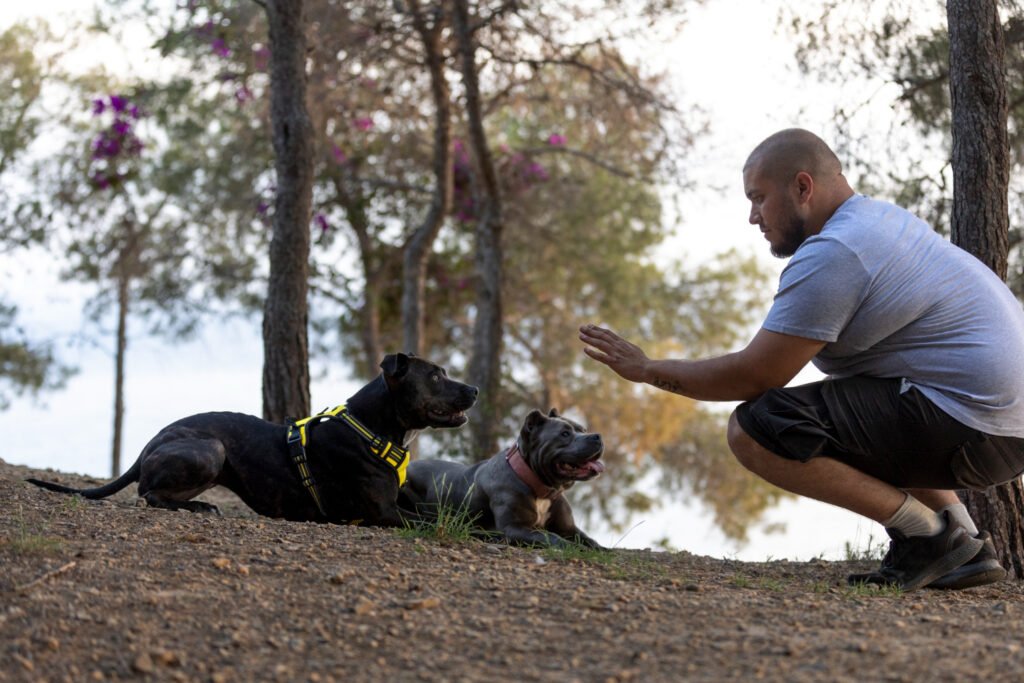
Positive reinforcement means adding something the dog values immediately after a behavior you want to see again. That reward may be a small treat, a favorite toy, praise, a short game, or access to something the dog wants, such as sniffing a tree or going into the yard.
Timing matters. If the reward arrives several seconds after the behavior, the dog may connect it with something else. A brief marker word such as “yes” can help identify the right moment, followed promptly by the reward. Positive reinforcement does not mean ignoring unwanted behavior. It means actively teaching a practical alternative.
Dogs also benefit from predictable structure when people are away for work, school, or appointments. A consistent routine for rest, supervised play, and calm transitions can complement training at home, whether a family uses occasional pet daycare or manages activity within the household.
Start With Skills That Matter Most
Choose skills that improve safety and daily comfort before trying complex tricks. For many Houston households, useful early goals include responding to a name, coming when called, sitting politely for attention, waiting at doors and gates, walking on a loose leash, leaving unsafe items alone, and settling on a bed or mat.

Work on one behavior at a time in a quiet space. Give the cue once, wait briefly, mark the correct response, and reward it. End while the dog is still engaged. Several short sessions spread through the day can provide more useful repetition than one long session that leaves the dog tired or frustrated.
Rewards Are Not Bribes
A reward follows the behavior. A bribe is shown first to persuade the dog to comply. In the beginning, frequent rewards can help a new skill become clear. Once the response is reliable in an easy setting, vary the reward while continuing to praise good choices. Everyday privileges can become rewards too: a loose leash earns forward movement, a sit earns a greeting, and a pause at the door earns access outside.
Practice Calm Behavior Around Distractions
Houston offers plenty of distractions, including delivery activity, neighborhood dogs, traffic sounds, visitors, and lively parks. Start farther away from the distraction than you think is necessary. Reward the dog for noticing it and then returning attention to you. If the dog becomes rigid, pulls hard, barks continuously, or cannot take food, the situation is probably too difficult at that moment.
Increase challenges gradually. Practice near a window before practicing on a sidewalk. Work at a distance from a guest before expecting a calm greeting. A short, successful outing is more useful than staying until the dog is overstimulated.
Build Better Leash Manners
- – Begin in a low-distraction area, such as indoors, a driveway, or a quiet stretch of sidewalk.
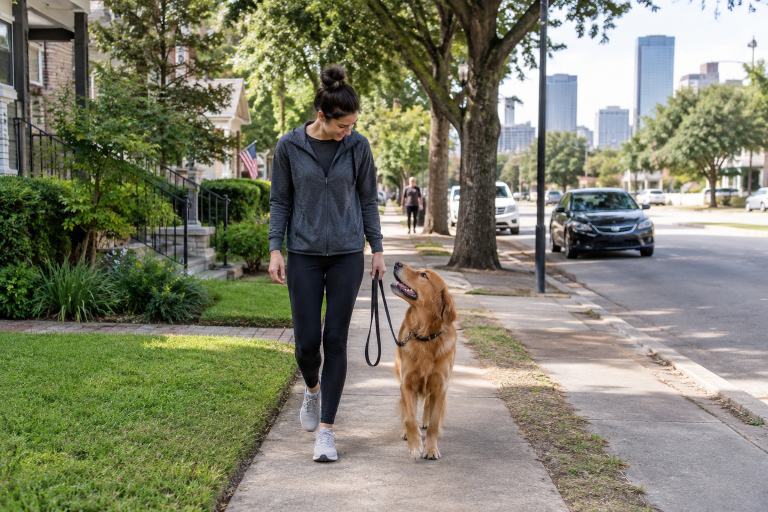
- – Reward the dog for walking near you with a loose leash.
- – If pulling begins, stop or calmly change direction instead of jerking the leash.
- – Reward check-ins, slack in the leash, and a return to your side.
- – Add busier locations only after the dog succeeds in easier places.
Likewise, jumping and attention-barking are easier to address when the dog has an alternative behavior. Teach four paws on the floor, a sit, or a station on a mat. Give attention to calm behavior, and ask visitors to follow the same plan. Consistency among household members is essential.
Recognize Stress Before It Escalates
Not every unwanted behavior is a training problem. A tucked tail, freezing, hiding, lip licking, avoidance, growling, or a suddenly stiff body may indicate discomfort or fear. Create distance from the trigger rather than forcing the dog to interact. Punishment can suppress warning signs without resolving the underlying emotion.
Any sudden behavior change should be discussed with a veterinarian, especially if pain, illness, or reduced mobility is involved. For serious aggression, persistent fear, or reactivity that creates safety concerns, seek qualified professional guidance tailored to the dog and situation.
Group Practice, Private Help, and Real-World Safety
Group training can give dogs a chance to practice focus around controlled distractions. One-on-one support may be more appropriate for a dog that is fearful, reactive, easily overwhelmed, or struggling with a specific household concern. Before choosing either option, ask about training methods, safety procedures, qualifications, and how owners will practice between sessions.
Training choices can influence a dog’s welfare and willingness to engage. Recent research on dog training choices highlights why owners benefit from considering both effectiveness and the dog’s experience. Safety skills also deserve regular practice. Examples from real-world dog safety training show how a well-practiced avoidance response can matter when a dog encounters a potential hazard.
A Seven-Day Plan for Building Momentum
- Day One: Practice name recognition and attention indoors.
- Day Two: Add sit, wait, and polite greetings.
- Day Three: Practice loose-leash walking in a quiet area.
- Day Four: Teach settling on a mat or bed.
- Day Five: Add mild household distractions.
- Day Six: Practice outside while maintaining a comfortable distance from triggers.
- Day Seven: Review the strongest skill and repeat the hardest one at an easier level.
Track Progress, Not Perfection
Keep brief notes on the behavior practiced, location, distraction level, reward used, and the dog’s response. Record signs of stress or fatigue as well. Avoid common mistakes such as repeating cues, changing rules, using rewards the dog does not value, or expecting reliable behavior in a new setting too soon.
Lasting manners are built through clear communication, realistic expectations, and steady practice. Small improvements, such as one calmer greeting or a few steps on a loose leash, can add up to a more comfortable daily life for dogs and the people who share Houston with them.