



Most offices don’t fail because of one dramatic design mistake. They become frustrating in much smaller ways. A chair that gets uncomfortable after an hour. A meeting table that’s just a little too cramped. Nowhere sensible to take a private phone call. Storage that somehow manages to be both bulky and inadequate. None of these things sounds particularly serious on its own, but together they can shape how people feel about being at work.
That’s why choosing commercial office furniture deserves more thought than simply filling an empty floorplan. Furniture influences movement, concentration, collaboration and even the small habits that develop within a workplace over time.
The Chair Problem Is Bigger Than It Looks
Office chairs are a good example of a purchase that can seem straightforward until people actually start using them. Something may look perfectly suitable in a showroom or product photo, but an office chair has to perform for hours at a time, five days a week. It needs to suit different body types, different working styles and, increasingly, desks that may be shared between several employees.
A chair that works for one person may feel completely wrong for another. That’s why adjustability tends to matter more than flashy styling. Seat height, back support, armrests and positioning all contribute to whether someone can settle into their work or spends the afternoon shifting around trying to get comfortable.
People rarely send an email saying, “This chair is reducing my concentration.” They simply become uncomfortable.
Layout Can Change Behaviour
Furniture also influences how people use a room. Place a large communal table in the centre of a workplace and it may become the natural location for informal discussions. Put comfortable seating beside a window and suddenly people start using that area for quick catch-ups.
On the other hand, poorly placed furniture can create bottlenecks and awkward spaces that nobody quite knows how to use.
This is especially noticeable in offices that have evolved gradually rather than being designed all at once. A desk gets added here, a cabinet appears there and suddenly the route to the printer resembles an obstacle course. Good layouts tend to feel obvious. People can move around without weaving between chairs. Teams can talk without disturbing the entire office. Storage sits near the people who actually use it.
Nothing feels particularly clever, because it simply works.
Not Every Conversation Belongs at a Desk

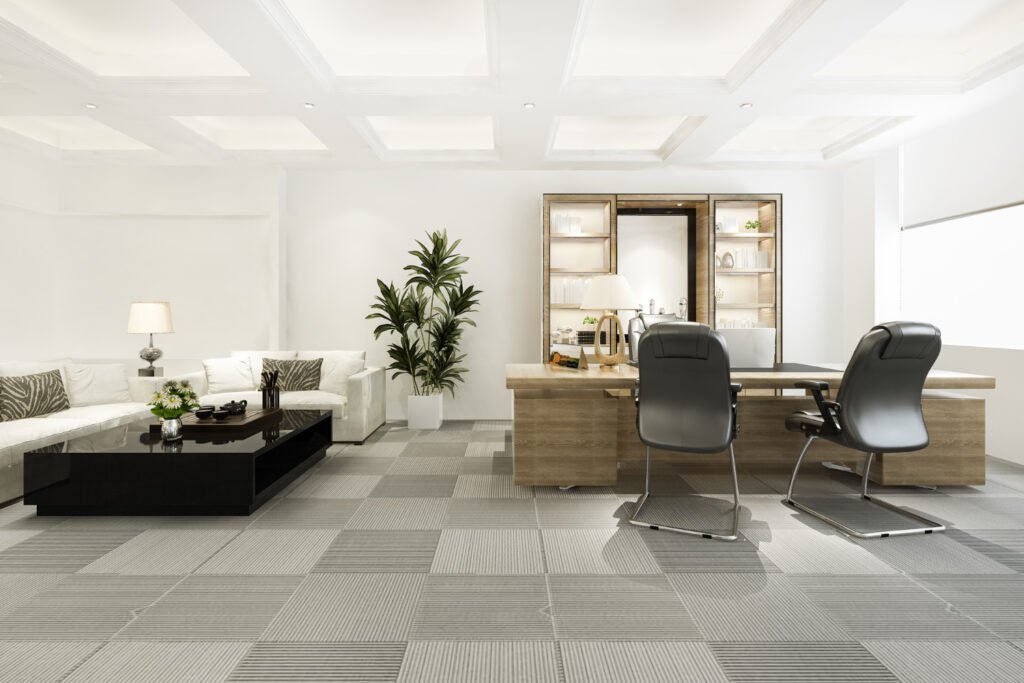
Small meeting booths, acoustic seating areas, breakout tables and informal lounge settings give employees options beyond their desks. Someone can take a video call without occupying a six-person meeting room, while colleagues can have a quick discussion without hovering awkwardly beside someone else’s workstation.
Open-plan offices solved some problems and created others. They can make collaboration easier, but they can also make it difficult to have a conversation without involving twenty unwilling listeners. That means modern office furniture often needs to support different levels of privacy.
These secondary spaces can be surprisingly valuable. In many workplaces, they’re used far more frequently than formal boardrooms.
Storage Still Matters
The so-called paperless office has been predicted for decades, yet cupboards continue to fill up. Even workplaces with minimal paperwork need somewhere for equipment, stationery, cables, employee belongings and all the miscellaneous items businesses accumulate.
Poor storage tends to make itself visible very quickly. Boxes appear under desks. Spare equipment gets stacked in corners. Cupboards become impossible to navigate because nobody planned what actually needed to go inside them. Integrated storage can make an office feel noticeably calmer.
The aim isn’t necessarily to hide absolutely everything. It’s to give everyday items a logical home so employees aren’t constantly improvising.
Furniture Has to Survive Real Offices

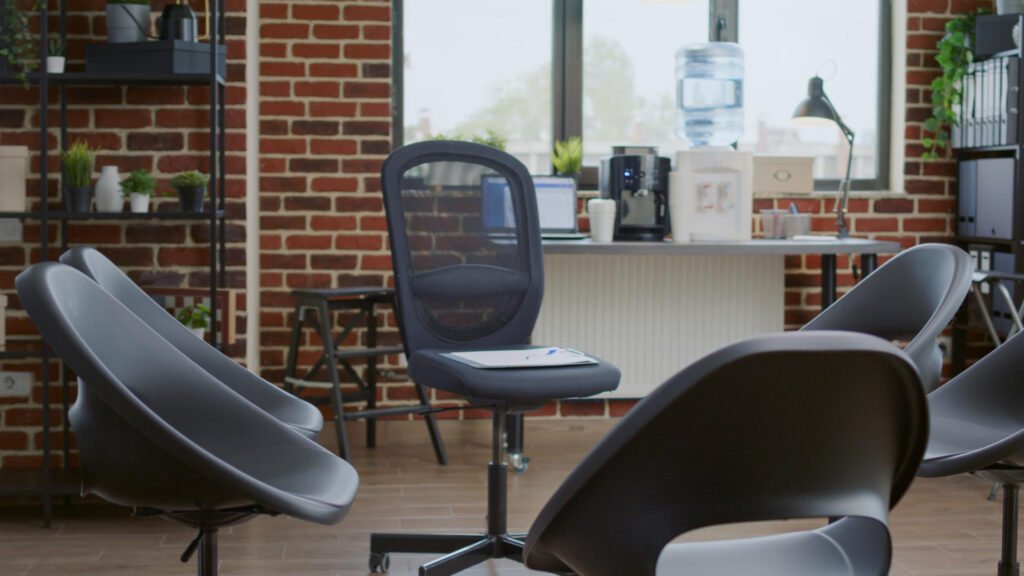
Commercial environments can be surprisingly hard on furniture. A dining chair at home might be used for an hour each evening by the same few people. An office chair may be used continuously by dozens of different employees over its lifetime. Meeting tables get bumped by laptops, bags and coffee cups. Drawers are opened repeatedly. Desks may be rearranged whenever teams change.
That difference in use is one reason furniture designed specifically for commercial environments can make sense. Durability isn’t glamorous, but replacing worn or broken furniture every couple of years isn’t particularly glamorous either.
Flexibility Has Become More Valuable
Hybrid work has also changed what many offices need. A workplace designed around every employee occupying the same desk every day may no longer make much sense if attendance varies throughout the week. That has encouraged more flexible layouts. Shared desks, movable tables, modular seating and multipurpose areas allow the office to adapt depending on who’s there and what they’re doing.
A space might host individual work in the morning, an informal workshop after lunch and a team meeting later in the afternoon. Furniture that can accommodate those shifts helps businesses get more value from the space they already have.
The Best Offices Rarely Shout About Their Furniture
Walk into a genuinely comfortable office and you may not immediately notice the furniture at all. That’s often a good sign.
Nobody is struggling to find somewhere to sit. Nobody is dragging chairs from another room before every meeting. Nobody is balancing paperwork on a filing cabinet because there isn’t enough surface space. Everything feels natural.
Good office design isn’t necessarily about creating a workplace that looks spectacular in photographs. It’s about paying attention to hundreds of small practical decisions that make the working day easier. Furniture happens to be involved in an awful lot of them.