


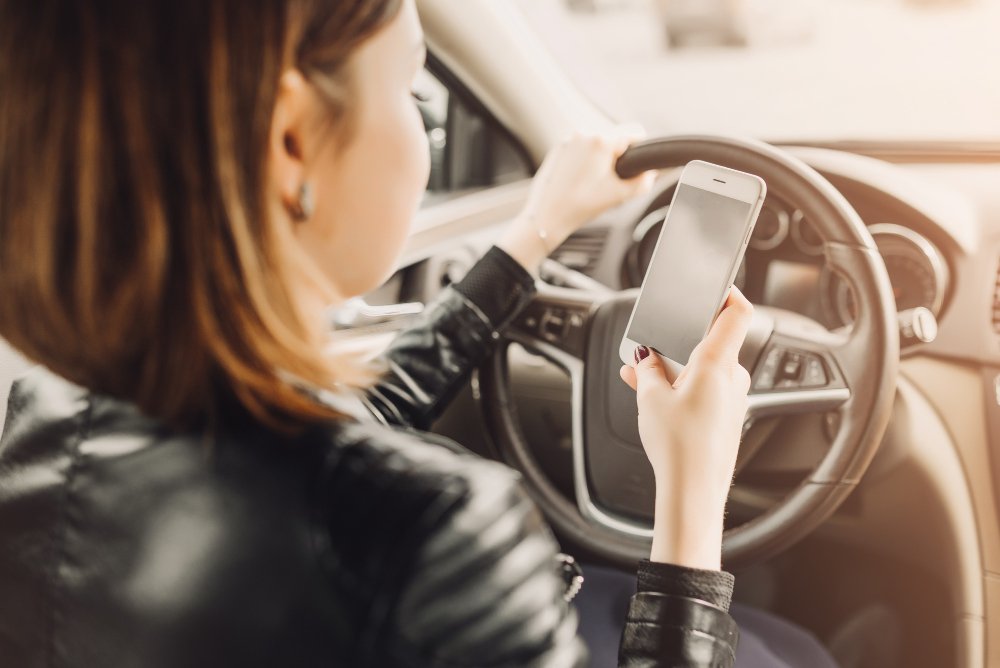
A year ago, glancing at a text at a Pennsylvania red light was the kind of thing most drivers did without thinking twice. Maybe an officer noticed, maybe not. Even if one did, they usually needed another reason to pull you over. That’s no longer how it works.
As of last summer, holding your phone behind the wheel is enough on its own to get you stopped. At a light, in traffic, anywhere on a public road. That shift changes what a careful driver should do, not only what the statute says on paper.
What Actually Changed Last Year
The rule is called Paul Miller’s Law, signed in June 2024 and effective in June 2025. It bans holding a phone or similar device while driving, and it applies even when you’re stopped in traffic or sitting at a red light. Hands-free is fine. Hand-held is not.
The old workaround of dropping the phone into your lap or resting it on the steering wheel doesn’t work anymore. If it’s in your hand, you’re in violation. That’s the piece most drivers still haven’t fully absorbed.
Does This Really Matter If You’re a Careful Driver?
Careful drivers tend to assume the law is aimed at someone else. The people scrolling at highway speed, or the teenagers. It isn’t, and the numbers make that clear.
According to Pennsylvania courts, the state logged more than 10,000 distracted driving offenses between 2020 and 2024, with violations peaking between 10 a.m. and noon. That’s not late-night recklessness. That’s the mid-morning school run, the drive to a meeting, the coffee-and-errands hour.
So the driver who gets pulled over under the new law isn’t necessarily the one you’d expect. It might be you, checking a calendar reminder in a parking lot exit.
What Should You Change in the Car Itself?
The technology to comply already lives in almost every car sold in the last decade. Most drivers just haven’t bothered to set it up. A few small steps take the temptation off the table:
- Mount the phone. A cheap dashboard or vent mount keeps the screen visible without ever putting the device in your hand. Navigation, music, and calls all run from there.
- Pair Bluetooth once. Ten minutes of setup means every call for the next three years routes through the car’s speakers. No fumbling required.
- Set a driving mode. Both iPhone and Android will auto-silence notifications when the car is moving. Turn it on and forget about it.
- Pre-load the route. Type the address before you shift into drive, not at the first red light.
What Happens If You’re in a Crash and Your Phone Was in Your Hand
This is where the law reaches past the traffic ticket. If there’s a collision and your phone was in your hand, that fact tends to surface fast. Phone records, in-car data, and witness accounts all point in the same direction. In a state that reduces your recovery based on your share of fault, a hand-held phone at the moment of impact is a heavy thumb on the scale.
It works the other way too. If the driver who hit you was holding a phone, that evidence matters, and it doesn’t preserve itself. Cell records get overwritten. Dashcam footage loops.
This is the point where talking to a personal injury attorney early, before the other side’s insurer starts shaping the narrative, changes what evidence is still around when you need it.
The Real Takeaway for Everyday Drivers
The law isn’t asking anyone to give up their phone. It’s asking drivers to stop holding it. That’s a smaller ask than it sounds, and the fix is mostly a one-time setup rather than a daily act of willpower.
The drivers who adjust now, before a ticket or a crash forces the conversation, are the ones who won’t have to think about any of this again.