Key Takeaways
- • Assess the equipment’s total load capacity and ensure the chosen casters meet or exceed that requirement. Overestimating load requirements helps provide a margin of safety in unpredictable work settings.
- • Wheel material selection should be based on flooring type and working environment to prevent premature wear, reduce replacement frequency, and avoid unintentional floor damage.
- • Factor in temperature, chemical exposure, and moisture when determining caster specifications—proper materials and coatings can be the difference between long-term performance and early failure.
- • Maneuverability and stability hinge on whether you use swivel, rigid, or a combination of both caster types; consider how each format impacts worker control and safety in your particular application.
- • Consistent maintenance and secure installation are crucial for maintaining ongoing performance and safety, ensuring that casters function correctly and withstand the demands of intensive, continuous use.
In industrial environments where large-scale machinery and bulky equipment are integral to daily operations, the ability to move these assets easily and safely is not just a matter of convenience but a core component of workplace efficiency and safety. Among the vast array of elements that contribute to smooth equipment mobility, casters often garner little attention. However, their role in creating seamless workflows across factory floors, warehouses, hospitals, and distribution centers cannot be overstated. Selecting the right casters goes far beyond basic mobility; it directly determines how sound equipment performs, how long it lasts, and how much sense of safety and control is available to your staff. Whether you are setting up a new production line, upgrading aging equipment, or simply aiming to improve productivity, knowing the essential criteria for choosing durable 5 inch caster wheels and other heavy-duty caster solutions is a foundational step towards a successful, cost-effective operation.
The correct casters act as a shield for your flooring, preventing costly damage and minimizing downtime from surface repairs. Beyond safeguarding surfaces, selecting the right caster can significantly prolong the functional lifespan of both your equipment and your floors, resulting in substantial savings on maintenance and replacements. Additionally, well-matched casters enhance workplace ergonomics, reducing the physical strain on workers tasked with transporting heavy loads. As businesses evolve and technologies in material handling advance, the range of available casters—from economy lines to highly specialized, corrosion-resistant designs—has expanded in tandem with the need for clear, actionable guidance. Whether your primary concern is chemical exposure, frequent cleaning, heavy loading, or temperature extremes, the evaluation process must address the specific details of each application. Factors like weight capacity, wheel composition, environmental exposure, and ease of movement all play interrelated roles in making a wise selection.
Understanding Load Capacity
The foundation of proper caster selection is to accurately calculate the intended load capacity before making any decisions. This encompasses not just the weight of the leading equipment itself, but also the full range of loads it could carry during routine operations—this includes shipped goods, specialized tooling, or even accumulated inventory. To further complicate matters, load distribution can sometimes be uneven, especially if goods shift during transit or machinery is not perfectly balanced. For safety and longevity, industry experts strongly advise utilizing a rating that extends beyond your calculated minimum, creating a cushion for unexpected circumstances such as impacts, bumps, and dynamic forces encountered during movement. Divide the total anticipated load by the number of casters you’ll be mounting, then select units that comfortably surpass this threshold for maximum assurance. Consulting national or global standards—such as those provided by the Occupational Safety and Health Administration (OSHA)—can further help ensure your equipment remains compliant and safe.
Choosing the Right Wheel Material
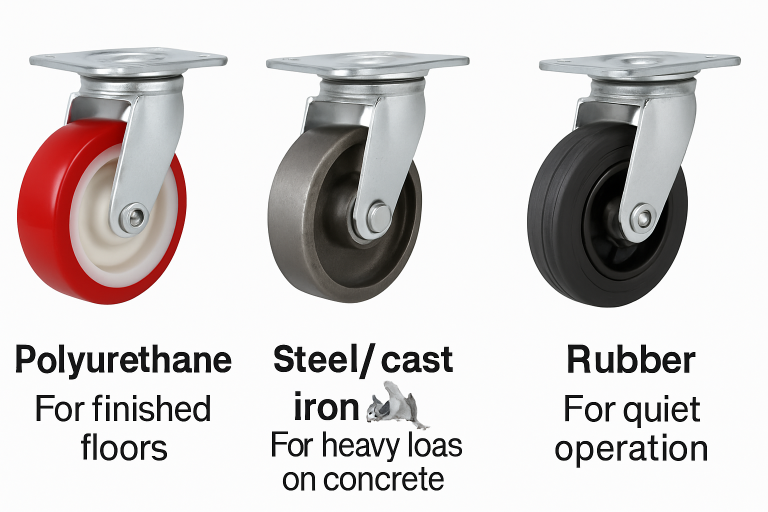
Material selection is one of the single most impactful decisions you’ll make when specifying casters. It determines not only the caster’s ability to withstand everyday abuses but also how it interacts with your floors and fits within the broader context of your facility operations. Common options include:
- • Polyurethane: This material is embraced by industry professionals for its remarkable balance between resilience and floor protection. Polyurethane is particularly adept at bearing significant weight without scuffing or scratching finished floors. It remains resilient against many common industrial chemicals. It minimizes operational noise—making it a wise choice for settings that require cleanliness and a relatively quiet environment, such as hospitals and laboratories. Polyurethane also provides excellent shock absorption over smooth, even surfaces.
- • Steel or Cast Iron: If your operation requires maximum strength for moving extremely heavy loads over rugged or uneven concrete, steel or cast iron wheels are designed for the challenge. These wheels can endure years of harsh use with minimal deformation, providing predictably sturdy support. However, steel and cast iron can be loud during movement and may accelerate the wear of softer or treated floors, so it is essential to assess your flooring before committing to these options.
- • Rubber: Rubber wheels offer perhaps the best blend of quiet operation and gentle touch, making them ideal for lighter loads or settings where noise reduction is crucial. Their natural shock-absorbing properties help shield both equipment and fragile cargo from vibration. That said, rubber casters may not last as long under heavy loads or in environments prone to temperature fluctuations or caustic substances, so consider your workload and facility conditions.
Understanding the amount and frequency of equipment movement, the types of floors in your facility, and the kind of operational hazards experienced daily will inform which wheel material offers the best tradeoff between safety, operational efficiency, and lifecycle cost.
Considering Environmental Factors
Casters are not immune to the varying environmental stressors found in many industrial settings. Exposure to moisture, corrosive chemicals, temperature extremes, and regular cleaning protocols all take their toll—creating a strong need for materials and finishes that can withstand such conditions. For facilities where equipment is positioned near ovens, furnaces, or industrial cookers, it’s essential to select heat-resistant casters that retain their structural integrity under prolonged exposure to high temperatures. Conversely, operations involving frequent wash-downs, high humidity, or exposure to cleaning detergents should turn to stainless steel or zinc-plated casters, both of which provide crucial resistance to rust and chemical attack.
Extra protection—such as sealed bearings or coated wheel treads—may be essential in preventing corrosion and extending the viable life of the caster, thereby prolonging maintenance intervals and reducing the likelihood of unexpected breakdowns. The Assembly Magazine offers additional insights into best practices for enhancing productivity and safety through informed material handling decisions in demanding environments.
Swivel vs. Rigid Casters
Ensuring optimal mobility and control for your equipment largely depends on choosing between swivel and rigid caster types. Swivel casters—capable of 360-degree rotation—grant users the flexibility to easily steer loads through intricate layouts, maneuver into tight spaces, or quickly alter direction in response to changing workflow needs. This flexibility is indispensable for environments where obstructions are common or where carts and machinery need to be repositioned regularly. Rigid casters, on the other hand, remain fixed and only roll in straight lines. They offer superior directional stability, making them well-suited for applications that require straight travel along predefined paths or tracks. Many heavy-duty installations utilize both types—swivel casters on one end for directional changes and rigid casters on the other for steady, predictable control—thus delivering smooth, ergonomic movement without sacrificing safety or load-bearing capability.
Maintenance and Installation
No matter how robust the caster, ongoing performance hinges on regular maintenance and correct installation. Opting for maintenance-free casters equipped with sealed bearings can significantly reduce servicing costs and minimize unexpected downtime. Nonetheless, installation is equally essential: use mounting plates or hardware rated for your caster’s capacity, verify the frame’s strength at the attachment points, and confirm that all casters are correctly aligned. Misaligned or loosely affixed casters can cause excessive side loads, which quickly wear out the wheels and may even lead to equipment instability or failure. Periodic checks—such as cleaning, tightening fasteners, and replacing worn parts—are vital for maintaining functionality and preserving the integrity of both the casters and the equipment they support.
Conclusion
Selecting the ideal casters for heavy-duty equipment goes beyond checking a few product specs—it requires a thorough analysis of multiple factors such as weight requirements, environmental hazards, flooring compatibility, and ease of movement. By carefully weighing all considerations—from picking the right 5-inch caster wheels to inspecting installation procedures and prepping your workspace for environmental stresses—you position your operation for greater efficiency, reduced hazards, and maximized long-term value. Thoughtful preparation and attention to detail when specifying your casters ensure an investment that delivers years of dependable, hassle-free performance—supporting your workflow and safeguarding your most critical assets every step of the way.